As sustainability becomes an increasingly urgent global priority, reducing food waste has evolved as a key strategy for lowering greenhouse gas emissions. Composting food waste transforms organic materials into valuable, environmentally friendly resources. However, food waste is often discarded along with its non-organic packaging, creating a significant challenge. This is where food waste depackaging technology comes in, effectively separating organic material from non-compostable contaminants, allowing each to be processed accordingly.
Commercial composting businesses stand to gain significantly by integrating depackaging technology into their operations. Not only does food waste improve the health and quality of the compost, but it also opens the door for additional revenue streams. The question is, how can a composting business successfully incorporate this new technology into an already well-established operation?
What is food waste depackaging?
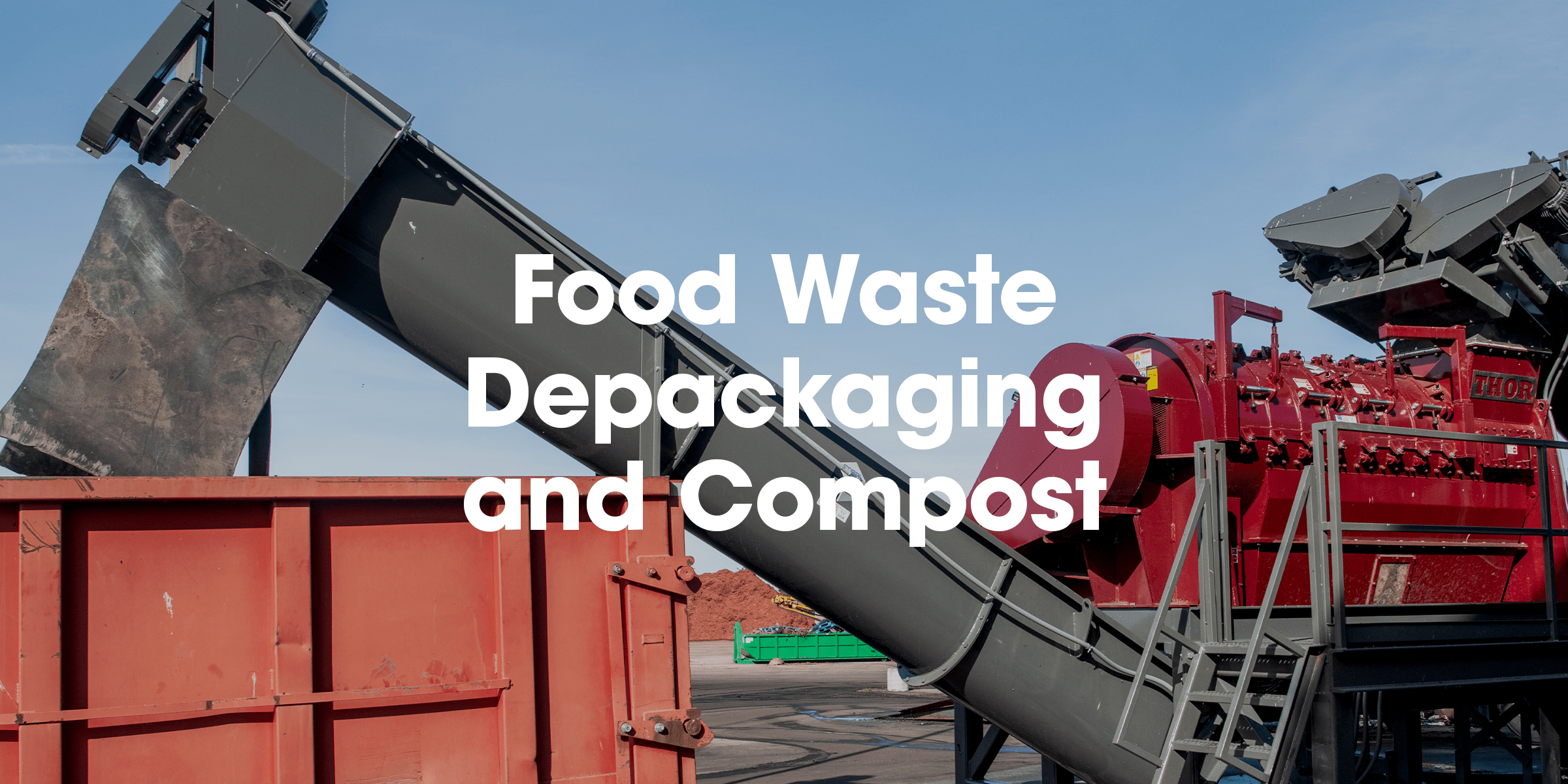
Food waste depackaging is the process of separating organic material from non-organic packaging, such as plastics, metals, and multi-layered materials. Typically, food waste within these materials ends up in landfills because the packaging is difficult to recycle or repurpose, preventing proper processing. When this happens, the landfilled food waste emits methane, a powerful greenhouse gas.
As waste management regulations (like California’s SB 1383) emerge, food waste depackaging continues to gain traction. Depackaging equipment technology is purposefully engineered to separate organic material from non-compostable packaging, reducing landfill waste and environmental impact while helping businesses comply with regulations and commercial compost producers to generate higher-quality compost for agricultural or landscaping use.
Why incorporate food waste depackaging into commercial compost production processes?
Incorporating food waste depackaging into commercial compost production is a highly beneficial step for composters. When properly processed, food waste can significantly enhance compost by adding vital nutrients that improve soil quality and promote healthier plant growth. By integrating depackaging technology into their production workflows, composters not only enhance the quality of their end product but also have the opportunity to generate additional revenue. Food waste can be collected from local haulers and businesses in their communities, like grocery stores and restaurants, creating a new revenue stream that diversifies their business model. This not only benefits the composting operation but also supports local waste diversion efforts. Furthermore, by adopting food waste depackaging now, composters can get ahead of surely impending regulations, such as those in California, positioning themselves for success down the road while staying competitive in a growing market focused on sustainability.
Steps for Implementing Food Waste Depackaging into a Composting Process
Food waste depackaging and commercial composting can go hand-in-hand, yet incorporating depackaging into your operation successfully will require careful thought and planning. Here’s a closer look at what’s involved:
1. Determine How/If Depackaging Will Fit Into Your Current Composting Process
First, assess whether your current composting process and facility can accommodate depackaging. This assessment includes evaluating your available space, capacity, and any potential logistical challenges. For example, do you have enough room for the necessary equipment? Will your existing system be able to handle the increased volume of food waste? These are important considerations before you make significant changes.
2. Evaluate Waste Streams
Next, look at the types of food waste you’ll be working with. Not all food waste streams will need, or benefit from, depackaging, so knowing exactly what you’re dealing with is crucial. Conducting a waste audit can help you identify where depackaging will most impact your operation. For instance, if you will accept large volumes of packaged food waste, you might need a high throughput depackaging system to keep up with demand.
3. Set Clear Goals
It’s also important to establish realistic and explicit goals for your depackaging process. Are you looking to diversify your waste streams? Improve the quality of your finished product? Adhere to new food waste recycling guidelines? Setting specific, measurable goals will help you stay on track and give you something to aim for as you refine your process.
4. Ensure Internal Processes Are Developed
Successful implementation of depackaging equipment requires developing robust internal processes. This includes outlining sourcing of the food waste you’ll be processing, which could come from food manufacturers, grocery stores, or restaurants. You also need to consider whether you’ll need additional equipment like a shredder to break down food waste that’s particularly hard to process, like bones and shells, or perhaps contamination removal equipment to ensure the waste is clean before it enters the system.
5. Select Appropriate Depackaging Equipment and Determine How to Source It
Once you’ve identified the right type of equipment, the next step is deciding how you’ll procure it. Will you rent, buy, or outsource the depackaging process to a third-party service? The decision should depend on your business’ specific needs. Look for equipment that meets your operational requirements, considering factors like throughput capacity and material compatibility.
6. Install Depackaging Equipment
Installation isn’t just about setting up the equipment, it’s about ensuring that everything fits into your existing operation smoothly. Think about how the new equipment may impact your site layout. Do you need to improve the infrastructure, like pouring a concrete slab or building additional storage space for incoming food waste? Be sure that your new equipment integrates seamlessly into your overall composting process before it is installed.
7. Monitor and Evaluate Performance
Once the equipment is in place and you’re up and running, it’s essential to monitor and assess the depackaging system’s performance. Are you meeting the goals you set? Are you experiencing new opportunities or challenges with your composting process now that you’ve incorporated food waste? Consistent and ongoing evaluation will enable you to identify any bottlenecks or inefficiencies in the process and make the necessary adjustments.
Adding food waste depackaging to your commercial composting process is a powerful way to enhance the quality of your products and enhance your business’ bottom line. By carefully evaluating your waste streams, setting clear goals, and selecting the right equipment, you can reduce contamination, improve throughput, and make your operation more sustainable. While the integration of depackaging technology requires some investment and planning, the long-term benefits—both operationally and environmentally—are substantial.
Viably is a valuable resource to help you navigate this process. Our team can guide you in selecting the right depackaging solution and assist with integrating it seamlessly into your existing facility, ensuring a smooth transition and maximizing the impact on your waste management system.
To learn more about food waste depackaging, please contact Christy Hurlburt, Director of Product – Food Waste Recycling Solutions, at churlburt@thinkviably.com.